How Much Does It Cost to Live in Moldova? A Complete Guide to Everyday Expenses


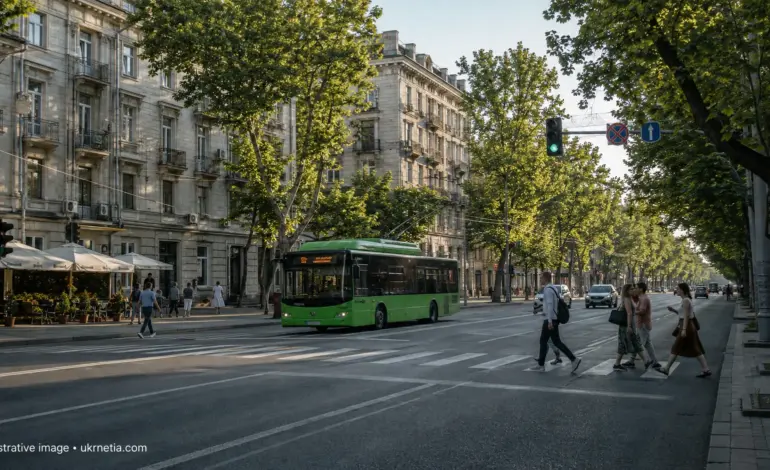
Imagine waking up in Chișinău on an ordinary Tuesday. You walk down a shaded boulevard lined with linden trees, order a cappuccino and a warm pastry at a corner café, and pay less than you’d leave as a tip in London. You take a trolleybus across the city for the price of a stick of gum, do a modest supermarket run, and later meet a friend for lunch at a neighborhood restaurant where the bill barely dents your wallet. In the evening you stroll through a leafy central park as the light turns gold over Soviet-era apartment blocks and glassy new residential towers standing side by side.
Now ask yourself the question this article exists to answer: How much would that ordinary day actually cost — and, far more importantly, what would it mean depending on who you are?
Because the same coffee, the same trolleybus ride, and the same plate of mămăligă feel completely different to a Moldovan schoolteacher earning a local salary than to a remote software developer paid in euros. That gap — between what things cost and what those costs mean — is the real story of living in Moldova. This guide is built around it.
(All figures reflect approximately mid-2026. As of August 2026, the National Bank of Moldova’s reference rate is roughly 1 EUR ≈ 20 MDL and 1 USD ≈ 17.5 MDL. Exchange rates fluctuate, so treat euro and dollar equivalents as approximate throughout.)
In Short
Moldova is one of Europe’s more affordable countries, but “affordable” depends entirely on your income. For someone earning a Western salary, everyday life in Chișinău is genuinely inexpensive: a comfortable one-bedroom rental runs roughly 9,000–14,000 MDL (about €450–700) per month, groceries for one person land around 4,000–6,000 MDL, and public transport costs pennies per ride. For locals earning near the national average gross wage of about 16,000 MDL (roughly €800), those same prices consume most of a paycheck. Utilities spike sharply in winter, imported goods can cost near-EU prices, and Chișinău is markedly pricier than smaller cities. Moldova isn’t simply “cheap” — it’s affordable relative to strong foreign currencies and demanding relative to local wages.
Moldova at a Glance
The table below gives realistic ranges for Chișinău as of mid-2026. These are typical figures, not universal ones — actual costs vary by neighborhood, season, and lifestyle.
| Category | Typical Cost / Range (MDL) | Approx. EUR | Notes |
|---|---|---|---|
| 1-bedroom rent (central Chișinău) | 9,000–16,000 / month | €450–800 | Higher for renovated or new-build |
| 1-bedroom rent (outside center) | 6,000–9,000 / month | €300–450 | Often better value |
| Utilities (small apartment) | 1,500–4,500 / month | €75–225 | Winter far higher than summer |
| Home internet | 150–220 / month | €8–11 | Fast fiber widely available |
| Mobile plan (with data) | 100–250 / month | €5–12 | Generous data packages |
| Groceries (one person) | 4,000–6,000 / month | €200–300 | Local produce keeps this low |
| Meal, inexpensive restaurant | 150–300 | €8–15 | Per person |
| Meal for two, mid-range | 500–1,500 | €25–75 | Three courses, no drinks |
| Cappuccino | 25–50 | €1.25–2.50 | Cheaper outside center |
| Public transport (single) | 6–7 | €0.30–0.35 | Monthly pass ~234 MDL |
| Taxi / ride-hailing (short trip) | 60–120 | €3–6 | App-based, widely used |
| Gym membership | 400–1,200 / month | €20–60 | Wide quality range |
| Cinema ticket | 120–200 | €6–10 | International releases |
Sources: National Bureau of Statistics of Moldova, National Bank of Moldova, local real-estate portals, and crowdsourced price data cross-checked as of mid-2026.
Housing: The Biggest Monthly Expense

For almost everyone, rent is the single largest line in the budget — and in Moldova it’s also the most misunderstood. Foreigners arrive expecting rock-bottom prices, then discover that central Chișinău has developed a genuine premium market, with sleek new residential complexes charging rents that would raise eyebrows in a mid-sized EU city.
Chișinău Rentals
A one-bedroom apartment in central Chișinău typically costs between 9,000 and 16,000 MDL per month (roughly €450–800), depending heavily on the building. A tidy but dated Soviet-era flat sits at the lower end; a renovated apartment in a modern complex with an elevator, secure parking, and contemporary finishes pushes toward — and sometimes past — the top of that range. Move outside the center, to districts like Ciocana, Botanica’s fringes, or Buiucani, and a comparable one-bedroom often falls to 6,000–9,000 MDL (€300–450).
Larger apartments scale accordingly. A two-bedroom in a desirable central location commonly runs 12,000–20,000 MDL, and spacious three-bedroom flats in premium buildings can reach 22,000–35,000 MDL or more. Families frequently find better value slightly out from the core, where a three-bedroom outside the center may sit around 10,000–20,000 MDL.
What Actually Drives the Price
Rent in Chișinău is shaped by a familiar cluster of factors: the neighborhood and its prestige, the age and condition of the building (a renovated “euro-repair” interior commands a real premium), whether the flat is furnished, the type of heating, proximity to the center and to public transport, and increasingly whether parking is available. New-build complexes with modern insulation, elevators, and underground parking occupy the top tier; unrenovated blocks from the 1970s and 1980s anchor the bottom.
Furnished vs. Unfurnished, Deposits, and Fees
Most rentals aimed at newcomers come furnished, which is convenient but priced accordingly. Expect to pay a deposit equal to one month’s rent, plus the first month upfront. If you rent through an agency, a commission — often around half a month’s to a full month’s rent — is common. Many advertised rents exclude utilities, so always clarify whether the quoted figure includes heating, which is the variable that can transform a budget in January.
Why Smaller Towns Cost Much Less
Rent in cities like Bălți, Cahul, or Comrat can run 30–50% below Chișinău for comparable space. A one-bedroom that fetches 12,000 MDL in the capital’s center might rent for 4,000–6,000 MDL in a regional town. The trade-off, explored later, is access: the capital concentrates the jobs, services, and international connections that make those higher rents worth paying for many people.
Utilities and Internet
Here is where Moldova springs its most consistent surprise on newcomers: utilities are seasonal, and winter is expensive.
During the mild months, a small apartment’s combined utilities — electricity, water, gas, waste collection, and building maintenance — might total a modest 1,500–2,500 MDL. But Moldova relies heavily on imported energy, and the winter of 2025 delivered a painful reminder of what that dependence costs. After the country shifted its electricity supply away from the Transnistrian region toward the EU and Romania, the National Bank of Moldova reported that electricity prices jumped roughly 75%, natural gas around 27%, and district heating about 40% in early 2025. Tariffs have since partially stabilized — regulated heating and gas prices actually fell year-on-year through 2026 — but the baseline is now considerably higher than a few years ago.
The practical result: in the depths of winter, when central heating kicks in, a family’s total utility bill can climb to 3,500–5,000 MDL or more per month. Numbeo’s crowdsourced average for basic utilities on a mid-sized apartment sits around 4,250 MDL, but this masks enormous seasonal swing. A useful mental model:
- Small apartment / single person: ~1,500–2,500 MDL in summer, ~2,500–3,500 MDL in winter
- Couple, average apartment: ~2,000–3,000 MDL summer, ~3,500–4,500 MDL winter
- Family, larger apartment: ~2,500–3,500 MDL summer, ~4,500–6,000+ MDL winter
The government provides targeted cold-season energy subsidies to eligible households, which cushions the blow for lower-income residents but doesn’t appear on a foreigner’s bill.
On the brighter side, connectivity is excellent and cheap. Moldova has some of the fastest and most affordable fiber internet in the region. A high-speed home connection costs roughly 150–220 MDL per month, and generous mobile plans with ample data run 100–250 MDL. For remote workers, this is one of the country’s quiet advantages.
Groceries: What Does Food Cost in Moldova?

Food is where Moldova’s affordability feels most tangible — provided you shop the way locals do. The country’s rich agricultural base means local produce, dairy, and meat are genuinely inexpensive and often excellent. Imported and branded goods are a different story.
Here’s a realistic basket of common items at a Chișinău supermarket in mid-2026:
| Item | Approx. Price (MDL) | Approx. EUR |
|---|---|---|
| Milk (1 liter) | 20–30 | €1.00–1.50 |
| Fresh bread (loaf) | 8–18 | €0.40–0.90 |
| Eggs (12) | 32–60 | €1.60–3.00 |
| Chicken fillet (1 kg) | 70–100 | €3.50–5.00 |
| Beef (1 kg) | 130–200 | €6.50–10.00 |
| Local cheese (1 kg) | 100–175 | €5.00–8.75 |
| Rice (1 kg) | 20–34 | €1.00–1.70 |
| Potatoes (1 kg) | 9–18 | €0.45–0.90 |
| Tomatoes (1 kg, in season) | 20–40 | €1.00–2.00 |
| Onions (1 kg) | 7–13 | €0.35–0.65 |
| Apples (1 kg) | 10–21 | €0.50–1.05 |
| Cooking oil (1 liter) | 30–45 | €1.50–2.25 |
| Coffee (250 g) | 80–150 | €4.00–7.50 |
| Bottled water (1.5 L) | 12–20 | €0.60–1.00 |
Local vs. Imported
The pattern is consistent across the region: home-grown goods are cheap, imported goods are not. Moldovan tomatoes, cucumbers, apples, potatoes, dairy, and wine are inexpensive, especially in season. But imported cheeses, out-of-season fruit, brand-name cereals, specialty coffee, and international-brand products can cost close to what you’d pay in Western Europe — because they largely are Western European imports.
Markets vs. Supermarkets
Chișinău’s markets — the sprawling Piața Centrală chief among them — are woven into daily life. They aren’t automatically cheaper than supermarkets, and prices are rarely negotiable for small purchases, but they excel at two things: freshness and seasonality. In late summer, market stalls overflow with tomatoes, peppers, grapes, and stone fruit at prices that make the supermarket produce aisle look expensive. In the depths of winter, when local produce is scarce, that advantage narrows. The savvy approach is seasonal: markets for fresh produce at their peak, supermarkets for packaged staples and convenience.
Eating Out in Moldova

Dining out is one of Moldova’s real pleasures, and one of the clearest illustrations of the local-versus-foreign income gap.
At an inexpensive local café or cantină — the cafeteria-style spots where office workers and students eat lunch — a filling meal costs 150–300 MDL (€8–15). A fast-food combo runs about 150 MDL. Sit down at a pleasant casual restaurant and a main dish lands in the same neighborhood, with drinks extra. Dinner for two at a mid-range restaurant, three courses without alcohol, typically totals 500–1,500 MDL (€25–75), and often lands comfortably in the middle of that band.
A cappuccino costs 25–50 MDL, a domestic draft beer around 40 MDL, and a soft drink 15–25 MDL. Traditional Moldovan cooking — plăcinte (savory or sweet pastries), sarmale (stuffed cabbage or vine leaves), mămăligă with cheese and sour cream, and grilled mici — is delicious, hearty, and among the best-value food in the country.
At the other end sits Chișinău’s growing crop of international and upscale restaurants — sushi bars, Italian trattorias, contemporary bistros, and wine-focused establishments — where a dinner for two with wine can climb to 1,500–3,000 MDL or beyond, rivaling prices in Bucharest or Warsaw.
What this means in practice depends entirely on income. A remote worker earning €3,000 could eat out most days without strain. A local family on an average income treats a mid-range restaurant dinner as an occasion, not a routine.
Transportation

Getting around Chișinău is remarkably cheap. The city runs a network of buses, trolleybuses, and minibuses (rutiere/marshrutkas), with a single ride costing just 6–7 MDL (about €0.35) and a monthly pass around 234 MDL (€12). For that price, public transport is effectively a rounding error in most budgets, even local ones.
Ride-hailing apps are widely used and inexpensive by Western standards: a typical cross-town trip costs 60–120 MDL (€3–6), with fares starting around 40 MDL. This affordability leads many residents — locals and expats alike — to rely on a mix of public transport and occasional taxis rather than owning a car.
Owning a car is a different calculation. Vehicles themselves are expensive relative to local incomes — a new compact car runs well over 500,000 MDL — and fuel costs around 23–30 MDL per liter (roughly €1.15–1.50), broadly comparable to regional prices. Add insurance, parking, and maintenance, and a car becomes a meaningful expense. For city dwellers, the math often favors public transport and ride-hailing; a car earns its keep mainly for those commuting from suburbs, traveling frequently between cities, or with families to ferry.
Intercity transport — buses and shared minibuses connecting Chișinău to Bălți, Cahul, Comrat, and beyond — is inexpensive, with most domestic routes costing well under 200 MDL.
Healthcare and Everyday Personal Expenses
Moldova operates a dual system: a public healthcare framework funded through mandatory insurance contributions, alongside a growing private sector that many residents and virtually all foreigners lean on for convenience and quality.
Pharmacies are plentiful and generic medications are inexpensive by Western standards. A private medical consultation with a specialist typically costs somewhere in the range of 300–800 MDL (€15–40), making out-of-pocket private care accessible in a way it rarely is in Western Europe. Dental care is a particular strength — Chișinău has become a modest destination for dental tourism, with quality work at a fraction of EU prices.
Everyday personal care is similarly affordable: a haircut ranges from around 100 MDL at a basic barber to several hundred at an upscale salon. Gym memberships span a wide quality spectrum, from about 400 MDL monthly at a basic facility to 1,000–1,200 MDL at a premium club. For families, private full-day preschool runs roughly 6,000–9,000 MDL per child per month — a significant cost that, notably, approaches or exceeds an average local monthly wage.
This section addresses costs and access only, not medical advice.
Entertainment and Leisure
A normal social life in Moldova can be built on almost any budget. A cinema ticket costs 120–200 MDL, museum admissions are typically modest, and the country’s parks, lakes, and public spaces are free and genuinely pleasant. Chișinău’s café culture is affordable enough to sustain a daily habit.
But it would be a mistake to cast Moldova as a place of only cheap pleasures. The capital has a real premium tier: cocktail bars, wine-tasting experiences at the world-famous Cricova and Mileștii Mici cellars, concerts, and stylish restaurants where an evening out costs what it would in any European capital. Nightlife ranges from inexpensive neighborhood bars to upscale clubs. Weekend trips to the countryside — wineries, monasteries, and the dramatic river landscapes of Orheiul Vechi — offer excellent value. The point is range: Moldova rewards both the frugal and those willing to spend.
Cost of Living in Chișinău vs Smaller Cities

The gap between the capital and the rest of the country is one of the defining features of Moldovan life.
In smaller cities — Bălți in the north, Cahul in the south, Comrat in the Gagauz region — rent runs 30–50% below Chișinău, groceries are marginally cheaper (produce especially), and everyday services from haircuts to restaurant meals cost noticeably less. Life is quieter, more rooted in local rhythms, and considerably lighter on the wallet.
The trade-off is opportunity. Chișinău concentrates the country’s professional jobs, its IT sector, its international schools and businesses, its best healthcare, its cultural life, and its transport links to the wider world. Salaries in the capital run well above the national average, while the smallest towns offer far fewer well-paid roles. For a remote worker whose income comes from abroad, a smaller city can be an appealing bargain. For someone dependent on the local job market, Chișinău’s higher costs are often the price of access to a decent living.
How Much Money Do You Need to Live Comfortably in Moldova?
Rather than multiplying individual prices, it helps to think in whole-life scenarios. The figures below assume Chișinău and reflect mid-2026 conditions.
One Person — Budget Lifestyle
Renting a modest apartment outside the center, cooking mostly at home, using public transport, and eating out occasionally, a single person can live on roughly 12,000–16,000 MDL per month (€600–800). This is a real, functional life — but it’s close to what an average local salary provides, which is precisely why so many Moldovans live carefully.
One Person — Comfortable Lifestyle
With a decent central one-bedroom, regular dining out, ride-hailing when convenient, a gym membership, leisure, and some savings, budget around 20,000–28,000 MDL per month (€1,000–1,400). This is a genuinely comfortable single life by local standards.
Couple — Comfortable Lifestyle
Because housing and utilities are shared, two people don’t cost twice as much as one. A comfortable couple’s budget lands around 28,000–38,000 MDL per month (€1,400–1,900), covering a good apartment, groceries, frequent dining out, transport, and leisure.
Family of Four
A family renting a larger apartment, running a car, paying for children’s activities or private preschool, and covering higher winter utilities should plan for roughly 40,000–60,000 MDL per month (€2,000–3,000), with private schooling pushing the top end considerably higher.
Remote Worker Earning a Foreign Salary

This is where the arithmetic shifts entirely. A remote worker earning €2,500–4,000 per month lives, by local standards, an upper-tier life on a fraction of their income: a premium central apartment, restaurants whenever they like, travel, and substantial savings. The gap between their income and Moldovan prices is the whole appeal.
Example Monthly Budgets
The table below sketches three single-person lifestyles in Chișinău. Figures are rounded and represent defensible mid-2026 ranges, not precise quotes.
| Expense | Budget (MDL) | Comfortable (MDL) | Higher-End (MDL) |
|---|---|---|---|
| Rent | 6,500 | 12,000 | 20,000 |
| Utilities | 2,500 | 3,000 | 4,000 |
| Groceries | 4,000 | 5,500 | 7,000 |
| Transport | 250 | 1,000 | 2,500 |
| Dining Out | 1,000 | 3,500 | 7,000 |
| Entertainment | 500 | 1,500 | 3,000 |
| Internet & Mobile | 300 | 400 | 450 |
| Personal Expenses | 1,000 | 2,000 | 4,000 |
| Total | ~16,000 | ~29,000 | ~48,000 |
| Approx. EUR | ~€800 | ~€1,450 | ~€2,400 |
Moldova vs Other European Countries
Cross-country comparisons are seductive and easy to misread, so treat these as broad positioning rather than precise verdicts. On crowdsourced cost-of-living indices in 2026, Chișinău consistently ranks among the least expensive capitals in Europe. Comparison sites place living costs in Bucharest roughly 18–24% higher than Chișinău, with Sofia and Tbilisi also generally more expensive.
But raw price indices can mislead, for reasons worth spelling out:
- Salaries differ sharply. Romania’s minimum wage is roughly three times Moldova’s, so even where prices are similar, purchasing power is not.
- Rent structures and housing quality vary, making headline rent figures hard to compare like-for-like.
- Taxes and social contributions differ.
- Imported goods often cost similar amounts across the region, compressing the apparent gap on anything not locally produced.
So while Moldova sits at the affordable end of the European spectrum on paper, the more meaningful truth is that it is affordable for outside income and demanding for local income — a pattern shared with much of Eastern and Southeastern Europe, and more pronounced in Moldova than in EU-member neighbors.
What Is Surprisingly Expensive in Moldova?
The “everything is cheap” narrative collapses the moment you shop for anything imported or premium.
- Imported electronics and international-brand goods cost roughly what they do in the EU — sometimes more, once import costs and smaller market scale are factored in. A phone or laptop is not meaningfully cheaper here.
- Cars, new or used, are expensive relative to local incomes, and running one adds up.
- International-brand clothing (Zara, H&M, Nike and the like) sits at broadly European price levels.
- Certain imported foods — specialty cheeses, out-of-season produce, branded groceries — carry a real premium.
- High-quality rental properties in Chișinău’s best new buildings command rents that surprise newcomers expecting bargains.
- Private healthcare and private education, while cheap by Western standards, are significant expenses measured against local wages.
The underlying reason is simple: Moldova is a small, largely import-dependent economy. Anything produced domestically — food, labor, services, housing stock — is cheap. Anything shipped in competes on global prices while local wages do not.
What Is Surprisingly Affordable?
The flip side is equally real, and it’s concentrated in goods and services produced locally.
- Public transport is nearly free by Western standards.
- Local seasonal produce, dairy, and meat are inexpensive and high quality.
- Restaurant meals at local establishments offer excellent value.
- Personal and professional services — haircuts, dental work, repairs, cleaning, tutoring — are cheap because they’re labor-based and labor is inexpensive.
- Wine is exceptional and absurdly affordable; Moldova is one of the world’s great wine countries.
- Regional travel and countryside excursions cost little.
Salaries and Purchasing Power
No cost-of-living guide to Moldova is honest without confronting wages, because this is where “cheap” and “affordable” part ways.
According to the National Bureau of Statistics, the average gross monthly wage in early 2026 was around 16,000 MDL (about €800), with the government projecting a full-year 2026 average near 17,400 MDL. The net figure, after Moldova’s flat income tax and social contributions, lands closer to 13,000–15,500 MDL. The minimum wage rose to 6,300 MDL per month in 2026.
But averages flatter the picture. The median wage is meaningfully lower than the average — a relatively small number of high earners pulls the mean upward — so a majority of workers earn less than the headline figure. Pay varies enormously by sector:
- IT and information/communication: the highest-paying sector by far, with averages around 39,000 MDL and top roles well beyond that, buoyed by Moldova’s IT Park regime and its favorable single 7% tax on qualifying income.
- Finance and insurance: averages around 28,000 MDL.
- Energy and utilities: around 22,000 MDL.
- Public sector (education, culture): notably lower, often 11,000–14,000 MDL.
- Agriculture and hospitality: among the lowest, frequently around 10,000 MDL or less.
Chișinău wages run well above the national average; the regions trail. And this is the crux: a country can have low prices and still be a stretch for many of its own residents. Cost of living measures what things cost. Standard of living measures what your income actually buys. In Moldova the two diverge sharply, which is why the same café latte is trivial for one person and a small indulgence for another.
Can a Foreigner Live Comfortably in Moldova?
For remote workers, freelancers, retirees, students, and foreign employees, Moldova can be an outstanding value — with the caveats above firmly in mind. Roughly:
- €1,000/month: Comfortable and secure by local standards, well above the median local income. A decent apartment, regular dining out, and modest savings are all within reach for a single person.
- €1,500/month: Genuinely comfortable. A good central apartment, frequent restaurants, leisure, travel, and real savings.
- €2,000/month: Upper-tier living. Premium housing and few financial worries for a single person or a frugal couple.
- €3,000+/month: Effectively luxury by local standards, with the best of what the country offers and substantial savings.
These are illustrative, not guarantees — housing choices, family size, winter heating, and imported-goods habits can all bend the numbers. But the headline holds: for those earning in a strong foreign currency, Moldova offers a European lifestyle at a fraction of Western European cost.
Hidden Costs Newcomers Often Forget
The monthly-budget view leaves out the one-off and seasonal costs that catch newcomers off guard. Budget separately for:
- Rental deposit and agency fees — typically a month’s deposit, first month’s rent, and often a commission.
- Furniture and household setup, if renting unfurnished.
- Winter heating, which can double or triple summer utility bills.
- Private healthcare, if you skip or can’t access the public system.
- Banking and international transfer fees for moving money in from abroad.
- Insurance — health, and possibly a car.
- Visa and residency costs, depending on nationality and status.
- Imported goods and electronics, which cost more than the “cheap Moldova” reputation implies.
- Intercity travel if you settle outside Chișinău but frequently need the capital.
Myths vs Reality
Myth: “Moldova is one of the cheapest places in Europe.” Reality: True on price indices, but low prices don’t equal high purchasing power. For locals earning local wages, Moldova is not cheap at all — it’s demanding. The affordability is real only relative to stronger foreign incomes.
Myth: “You can live extremely comfortably on any small foreign income.” Reality: A modest foreign income goes a long way, but housing quality, imported goods, winter heating, and private services can reshape a budget quickly. Comfort is very achievable; “any income covers everything” is an exaggeration.
Myth: “Everything is cheaper than Western Europe.” Reality: Locally produced goods and services are much cheaper. Imported electronics, brand-name clothing, cars, and specialty foods often cost about the same as in the EU — sometimes more.
Why Moldova’s Cost of Living Looks the Way It Does
Prices don’t appear from nowhere; they reflect structure. Moldova’s cost landscape is shaped by a handful of forces working together.
The country has comparatively low income levels, which keeps the price of anything labor-based — services, local food, housing construction — low. It is heavily dependent on imported energy, which is why the 2025 supply shift toward the EU and Romania sent utility bills sharply higher and why winter costs bite. Its strong agricultural base keeps local produce, dairy, and wine cheap and abundant. Its small, import-reliant economy means manufactured and branded goods track global prices while wages don’t. Geography matters too: landlocked between Romania and Ukraine, integrating steadily with European trade as an EU candidate, Moldova’s costs increasingly reflect European supply chains. Currency and inflation play their part — annual inflation ran in the range of roughly 6.5–8% through 2026, keeping upward pressure on prices. And Chișinău’s dominance as the economic center concentrates demand, jobs, and higher costs in one city while the regions lag. Understanding these forces explains not just what things cost, but why.
Why It Matters Today
Moldova’s cost of living isn’t an abstract statistic — it shapes real decisions for a wide cast of people. For residents, it determines how far a paycheck stretches in a period of elevated inflation and higher energy prices. For the country’s large diaspora, weighing a return home, it’s a calculation about whether local opportunities can match lives built abroad. For foreign workers, remote professionals, retirees, and students, it’s the promise of a European lifestyle at a discount — provided the income comes from outside. For investors eyeing a small but reforming economy on the EU’s doorstep, it’s a signal about labor costs, consumer power, and growth. The through-line is that affordability means nothing in isolation; it only acquires meaning when placed alongside wages and quality of life.
Visiting or Living in Moldova?
A crucial distinction often blurred by travel-cost websites: a tourist and a resident spend money in completely different ways.
A visitor’s budget skews toward hotels, restaurants, taxis, and attractions — the categories where Moldova, while still affordable, costs the most. A traveler might conclude the country is pricier than it is, or cheaper, depending on which restaurants they choose.
A resident’s budget is dominated by rent, utilities, groceries, and household goods — where the real economics of daily life play out, and where the local-versus-foreign income gap becomes decisive. Winter heating alone can reshape a resident’s finances in a way no tourist ever notices.
This is why a weekend visit tells you little about the cost of living here. The two experiences run on different math.
Frequently Asked Questions
Is Moldova expensive to live in? Not by European standards — it’s among the continent’s more affordable countries. But “affordable” depends on income: cheap for those earning foreign currency, demanding for those on local wages.
How much money do you need to live comfortably in Moldova? In Chișinău, a single person lives comfortably on around 20,000–28,000 MDL (€1,000–1,400) per month. A couple needs roughly 28,000–38,000 MDL; a family, 40,000–60,000 MDL.
How much is rent in Chișinău? A central one-bedroom typically runs 9,000–16,000 MDL (€450–800) per month; outside the center, 6,000–9,000 MDL. Larger and premium apartments cost considerably more.
Is Moldova cheaper than Romania? Generally yes. Cost-of-living comparisons in 2026 place Chișinău roughly 18–24% cheaper than Bucharest, though Romanian salaries are substantially higher.
Is Moldova cheaper than Bulgaria? On most 2026 indices, yes — Chișinău tends to rank below Sofia on overall living costs, though the gap varies by category.
How much do groceries cost? A single person spends roughly 4,000–6,000 MDL (€200–300) monthly, kept low by cheap local produce, dairy, and meat. Imported goods cost more.
How much does a meal cost? An inexpensive restaurant meal runs 150–300 MDL per person; dinner for two at a mid-range spot, 500–1,500 MDL without drinks.
What is the average salary? The average gross monthly wage in early 2026 was around 16,000 MDL (€800), with the 2026 full-year average projected near 17,400 MDL. Net pay is lower, and the median is below the average.
Can a foreigner live comfortably on €1,500? Yes — comfortably. In Chișinău, €1,500 supports a good central apartment, frequent dining out, leisure, and savings for a single person.
Is Chișinău expensive? It’s the most expensive place in Moldova, with a genuine premium housing and dining market, but still affordable compared with most European capitals.
Is Moldova good for remote workers? Increasingly so: fast, cheap internet; low living costs relative to foreign income; a growing café and coworking scene; and an emerging IT ecosystem. Visa and residency logistics vary by nationality.
Which Moldovan city is cheapest? Smaller regional cities like Bălți, Cahul, and Comrat run 30–50% below Chișinău on housing, with lower everyday costs — at the expense of fewer jobs and services.
Final Thoughts

The question that draws most people to an article like this — “Is Moldova cheap?” — turns out to be the wrong one. It has an answer (yes, on paper), but the answer explains almost nothing about what living here is actually like.
The better question is: “What kind of life can I build in Moldova for my income?” For a remote worker earning euros, the answer is a spacious apartment, restaurants at will, travel, savings, and a comfortable European lifestyle for a fraction of Western cost. For a Moldovan schoolteacher, the same prices describe a careful, budgeted life where a restaurant dinner is an event and winter heating is a genuine worry. Same city, same coffee, same trolleybus — two entirely different realities.
Cost of living, in other words, is meaningful only alongside income, housing, purchasing power, lifestyle, location, and expectations. Hold those together and Moldova reveals itself not as a “cheap country” but as a place where the relationship between prices and wages is unusually stark — affordable and demanding at once, depending entirely on which side of that gap you stand.
Why This Story Matters to the World
Moldova is a small country, but its cost-of-living story is a window onto forces reshaping the entire continent. It sits at the seam between Eastern and Southeastern Europe, integrating with EU trade and supply chains while its wages remain far below Western levels — a tension visible in every imported price tag. It embodies the new economic geography of remote work, where a person’s income and their cost of living can be decoupled across borders, turning affordable countries into magnets for foreign earners and sharpening the divide between local and outside money. It illustrates regional inequality — a dominant capital pulling ahead of a lagging countryside — and the widening gap between what things cost and what people are paid. In Moldova, the abstract relationship between prices and wages becomes concrete, human, and impossible to ignore.
Key Takeaways
- Moldova is among Europe’s most affordable countries, but affordability depends entirely on income — cheap for foreign earners, demanding for local wages.
- In Chișinău, a comfortable single-person life costs roughly €1,000–1,400 per month; a couple, €1,400–1,900; a family, €2,000–3,000.
- Rent is the biggest expense: €450–800 for a central one-bedroom, with a real premium market in new buildings and 30–50% savings in smaller cities.
- Utilities swing sharply by season; winter heating is Moldova’s most consistent budget surprise, elevated further by the 2025 energy-supply shift.
- Locally produced food, services, transport, and wine are genuinely cheap; imported electronics, cars, brand-name clothing, and specialty foods cost near-EU prices.
- The average gross wage is around 16,000 MDL (€800), but the median is lower and pay varies hugely by sector, with IT and finance far ahead of public-sector and agricultural work.
- Chișinău offers higher costs but concentrates jobs, services, and opportunity; smaller cities trade access for affordability.
- Travel budgets and living budgets diverge sharply — a visit is a poor guide to the cost of settling down.
Continue Exploring Moldova
- Cost of Living in Chișinău: A Neighborhood-by-Neighborhood Guide
- Average Salaries in Moldova: Which Sectors Pay Best
- Is Moldova a Good Country for Digital Nomads?
- Best Cities to Live in Moldova Beyond the Capital
- How Much Does Rent Cost in Moldova? A Complete Housing Guide
- Moldova vs Romania: Cost of Living Compared
- Food Prices in Moldova: Markets, Supermarkets, and Seasons
- Buying Property in Moldova: What Foreigners Need to Know
- Healthcare in Moldova: Public vs Private
- Public Transportation in Chișinău: How to Get Around